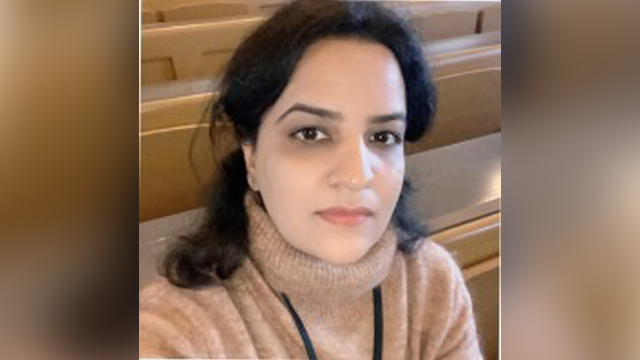
Dr Taniya Malik
Assistant Professor in The Indian Law Institute, New Delhi.
1. Introduction
The under-representation of women in Indian legislatures has long been treated as a political embarrassment rather than a constitutional problem. That approach is no longer tenable. Women constitute nearly half of India’s population and participate actively as voters, campaigners, party workers, movement leaders and local representatives. Yet the formal institutions that make law continue to remain overwhelmingly male. The 18th Lok Sabha has only 74 women members, about 13.6 per cent of the elected House and this represents a decline from the 78 women elected to the 17th Lok Sabha. The number is even more striking when placed beside the fact that women’s voter turnout has repeatedly equalled or exceeded that of men in several states. The difficulty, therefore, is not political passivity among women. It is the failure of electoral institutions, party structures and social conditions to translate women’s democratic participation into legislative power (PRS Legislative Research, 2024).
This representational gap also appears in the nomination stage. The Association for Democratic Reforms reported in 2026 that among more than 51,000 candidates analysed in recent Lok Sabha and State or Union Territory Assembly elections, only about ten per cent were women. Such data matters because it weakens the common claim that women’s under-representation is simply the result of voter choice. Voters cannot elect women in meaningful numbers if political parties do not nominate them in meaningful numbers and especially if they do not nominate them in winnable seats. The candidate selection process is therefore a crucial site of constitutional concern. It is here that private party control intersects with public democratic legitimacy (Association for Democratic Reforms & National Election Watch, 2026).
The Constitution (One Hundred and Sixth Amendment) Act, 2023 seeks to address this democratic deficit by reserving one-third of seats for women in the Lok Sabha, State Legislative Assemblies and the Legislative Assembly of Delhi. The amendment inserts article 330A, which provides for reservation of seats for women in the House of the People, article 332A, which provides for reservation in State Legislative Assemblies and article 334A, which deals with commencement, duration and rotation. It further provides that one-third of the seats reserved for Scheduled Castes and Scheduled Tribes shall be reserved for women belonging to those communities. The constitutional recognition of women’s legislative reservation is thus both a symbolic and institutional moment. It shifts the debate from voluntary party benevolence to constitutional obligation (Constitution [106th Amendment] Act, 2023).
The amendment, however, cannot be understood as a simple victory. It emerged after a long and politically contested history. Constitutional amendment bills for women’s reservation were introduced in 1996, 1998, 1999 and 2008. The 2008 Bill was passed by the Rajya Sabha in 2010 but lapsed with the dissolution of the 15th Lok Sabha. For nearly three decades, the broad principle of women’s reservation enjoyed public support but suffered legislative failure. The eventual passage of the 106th Amendment in 2023 ended that impasse, but only partially. The amendment does not immediately put women into legislatures. It makes implementation contingent on a post-commencement census and a subsequent delimitation exercise. Thus, the Constitution now recognises the defect, but defers the remedy (PRS Legislative Research, 2023).
This article therefore proceeds from a simple proposition: the question is no longer whether women’s reservation is constitutionally permissible. The stronger question is whether the design adopted in 2023 is constitutionally adequate. The answer advanced here is mixed. The amendment is valid as an exercise of constituent power and is supported by the Constitution’s commitment to substantive equality. It is also consistent with the existing constitutional practice of reserving seats for Scheduled Castes and Scheduled Tribes and of reserving seats for women in local bodies. Yet its design may weaken its transformative potential. A constitutional amendment can be defensible in principle and still be flawed in form. The 106th Amendment belongs to that category.
This article adopts a doctrinal legal research methodology. It analyses constitutional text, constitutional amendment history, statutory materials, judicial decisions, parliamentary materials, committee reports, international documents and scholarly writings on gender, political representation and quota design. The analysis asks how constitutional provisions should be read together, how judicial precedent has developed the concept of substantive equality, how political reservation differs from public employment reservation and how comparative constitutional experience can guide institutional design. The article also considers whether a measure that appears progressive at the level of constitutional text may remain incomplete at the level of implementation.
The first research question is whether reservation for women in Parliament and State Legislative Assemblies is constitutionally justified as a measure of substantive equality and democratic representation. The second is whether the specific architecture of the 106th Amendment, especially its linkage with census and delimitation, its rotation model and its omission of an OBC women’s mechanism and upper-house representation, weakens its promise. The third is what India can learn from comparable jurisdictions that have adopted reserved seats, candidate quotas, parity rules or mixed quota systems for women’s political representation.
The comparative part of this study is selective rather than exhaustive. Rwanda is examined because it demonstrates the numerical effectiveness of reserved seats. France is examined because it targets party nomination practices through parity law. Bangladesh and Pakistan are considered because they offer South Asian examples of indirectly elected reserved seats. Nepal is examined because it links women’s representation to party-level outcomes within a mixed electoral system. Latin American quota scholarship is also used because it shows how placement mandates and sanctions affect the success of candidate quotas. The point is not to transplant any one model into India. The point is to identify the legal choices that shape whether quotas remain symbolic or become politically effective.
2. Representation, Presence and the Constitutional Meaning of Political Equality
A serious critique of women’s reservation must begin with the concept of representation. Hanna Pitkin famously distinguished between formalistic, descriptive, symbolic and substantive representation (Pitkin, 1967). Descriptive representation refers to the extent to which representatives resemble the represented in socially relevant ways. Substantive representation refers to whether representatives act for the interests of those represented. Opponents of women’s reservation often argue that descriptive representation is an inadequate constitutional goal because women do not form a single political class and do not necessarily share a common set of interests. This objection has force, but only up to a point. It is correct that women are not politically homogeneous. It is wrong to conclude from this that women’s presence in legislatures is constitutionally irrelevant.
Anne Phillips’ argument for the politics of presence remains especially useful (Phillips, 1995). Phillips does not claim that all women think alike, or that only women can represent women. Her claim is that where a group has been historically excluded from political office, representation cannot be reduced to the abstract promise that someone else may speak for it. Presence matters because it changes deliberation, agenda-setting and the social meaning of public office. It affects who is considered politically competent, whose experience becomes legislatively visible and which questions are treated as public problems rather than private grievances.
Jane Mansbridge gives a more conditional defence of descriptive representation (Mansbridge, 1999). She argues that descriptive representation is particularly valuable where there is historical distrust, where interests are not fully crystallised and where representatives from dominant groups may not recognise the concerns of subordinated groups. This account fits the Indian context well. Issues such as domestic violence, sexual harassment, reproductive health, unpaid care work, access to public toilets, safe transport, menstrual dignity, widowhood, gendered land rights and workplace exclusion do not become law merely because they exist. They become law when political institutions are compelled to hear them. The presence of women legislators does not guarantee feminist legislation, but persistent absence makes neglect easier.
Iris Marion Young’s critique of universal citizenship is also relevant (Young, 2000). Young argued that a supposedly universal public sphere can conceal the norms of dominant groups and mark the experience of marginal groups as particular or sectional. In India, the male legislator has too often been treated as the default representative, while women’s claims are treated as sectional. Women’s reservation challenges that assumption. It insists that women’s access to legislative authority is not an identity concession but a democratic requirement.
This theoretical framework also clarifies why the Constitution permits group-conscious representation. The Indian Constitution does not imagine equality as an empty formal rule. Articles 330 and 332 reserve seats for Scheduled Castes and Scheduled Tribes in Parliament and State Legislative Assemblies. Articles 243D and 243T reserve not less than one-third of seats for women in panchayats and municipalities. Article 15(3) expressly permits special provisions for women and children. These provisions show that the Constitution is not hostile to corrective representation. It recognises that democracy may need structural devices to make representation real.
The scholarship on gender quotas supports this constitutional logic. Mona Lena Krook has shown that quotas are now a global mechanism through which political systems respond to women’s under-representation (Krook, 2009). Drude Dahlerup and Lenita Freidenvall describe quotas as a fast-track route to representation, especially where incremental change through ordinary party competition has been slow (Dahlerup & Freidenvall, 2005). Pippa Norris and Joni Lovenduski’s work on political recruitment further shows that candidate selection is shaped by both supply-side and demand-side factors, including party preferences, elite bias and assumptions about winnability (Norris & Lovenduski, 1995). These insights are important in India because women’s low representation cannot be explained by a lack of constitutional rights alone. It is produced by the political recruitment process.
3. The Chequered History of Women’s Reservation in India
The history of women’s reservation in India is marked by a tension between formal equality and corrective representation. During the framing of the Constitution, some women members opposed separate reservation for women. Renuka Ray, for example, expressed concern that reservation could confine women to reserved seats and undermine their claim to general citizenship (Constituent Assembly of India, 1946). That concern was principled. At the founding moment, many women leaders believed that universal adult franchise, equality before law and non-discrimination would gradually secure women’s participation without separate seats. They feared that reservation might convert women into a special category rather than equal citizens.
The later history of Indian politics proved that the hope of automatic inclusion was misplaced. Formal eligibility to contest elections did not translate into equal access to party tickets, finance, networks, security or political legitimacy. The Committee on the Status of Women in India recognised this problem in its landmark 1974 report Towards Equality. The report marked a shift in Indian feminist constitutional thought because it documented how women’s formal rights coexisted with deep political, social and economic exclusion (Government of India, 1974). It made clear that constitutional equality could not be assessed only by reading the text of rights. It had to be evaluated against institutional outcomes.
The first major constitutional correction came through local government. The 73rd and 74th Constitutional Amendments inserted articles 243D and 243T, requiring reservation of not less than one-third of seats for women in panchayats and municipalities. These provisions changed the scale of women’s participation in public office. They also created a large pool of women who gained experience in local governance, budgeting, public deliberation and community negotiation. Critics often dismissed women representatives in local bodies as proxies for male relatives and proxy representation certainly exists. Yet the evidence has never supported a simple proxy story.
Chattopadhyay and Duflo’s study of reservation for women in village councils found that women leaders altered public goods provision in ways that reflected women’s expressed priorities (Chattopadhyay & Duflo, 2004). Beaman and co-authors found that exposure to women leaders changed aspirations among girls and affected perceptions of women’s leadership (Beaman et al., 2012). Bhavnani’s study of Mumbai municipal elections suggested that women’s reservation could have effects even after withdrawal, by increasing the subsequent electoral success of women candidates (Bhavnani, 2009). These studies do not romanticise women’s leadership. They show that institutional design can change political supply, voter perception and policy attention.
The demand for reservation in Parliament and State Assemblies gained force after the local government experience. The Constitution (Eighty-first Amendment) Bill, 1996 first sought to introduce women’s reservation in Parliament and State Legislative Assemblies. Later bills were introduced in 1998 and 1999. The Constitution (One Hundred and Eighth Amendment) Bill, 2008 was passed by the Rajya Sabha in 2010, but it was never passed by the Lok Sabha and lapsed in 2014. The recurring failure of these bills was revealing. The idea of women’s reservation acquired legitimacy, but the actual redistribution of legislative opportunity generated resistance (PRS Legislative Research, 2023).
The opposition to earlier bills came from different directions. Some critics opposed quotas in principle. Others supported women’s reservation but argued that there must be a separate quota for OBC women. Some feared that dominant caste and elite women would capture the benefit. Others worried that rotating reserved constituencies would weaken the constituency-representative link. Rajeev Dhavan, writing in the context of earlier reservation debates, warned that the issue required careful institutional design and could not be reduced to a slogan of empowerment (Dhavan, 2008). Nivedita Menon similarly drew attention to the politics of the women’s reservation debate and the tension between gender justice and caste justice (Menon, 2004). The long history of the Bill thus shows that the problem was never only whether women should be represented. It was also which women, by which mechanism and with what effect on democratic accountability.
Zoya Hasan’s work on gender and democratic politics in India is helpful here because it situates women’s representation within party competition, secularism, minority rights and social justice (Hasan, 2009). Mary E. John’s writings on the politics of quotas likewise remind us that the Women’s Reservation Bill has always been more than a technical electoral reform (John, 2011). It is a site where constitutional equality, caste, party power and feminist strategy meet. The 106th Amendment inherits this unresolved history. Its passage did not end the debate. It constitutionalised one side of it while leaving several design concerns alive.
4. The Constitutional Design of the 106th Amendment
The 106th Amendment amends the Constitution in a direct but delayed form. It inserts article 330A to reserve seats for women in the House of the People. Article 330A(2) provides that one-third of seats reserved for Scheduled Castes and Scheduled Tribes shall be reserved for women belonging to those communities. Article 330A(3) provides that, as nearly as may be, one-third of the total number of seats to be filled by direct election to the House of the People shall be reserved for women. Article 332A makes a similar provision for State Legislative Assemblies. Article 239AA is amended to extend women’s reservation to the Legislative Assembly of Delhi. Article 334A addresses commencement, rotation and duration (Constitution [106th Amendment] Act, 2023).
The use of the phrase “as nearly as may be” is constitutionally familiar. It recognises that absolute mathematical precision may not always be possible in a system of single-member territorial constituencies. The phrase gives Parliament a limited margin of adjustment while maintaining the constitutional target of one-third reservation. It also avoids making the amendment vulnerable to purely arithmetical objections in states or territories with smaller legislative assemblies.
The amendment’s strongest feature is its internal reservation for Scheduled Caste and Scheduled Tribe women. This ensures that the existing SC and ST reserved seats are not simply taken as gender-neutral spaces in which men continue to dominate. Within those reserved seats, one-third must be reserved for women belonging to those communities. This is important because caste and tribe-based disadvantage do not disappear within gender. A Dalit woman or Adivasi woman may confront both patriarchal exclusion and community-specific social marginalisation. The amendment recognises this at least for SCs and STs.
The most controversial feature is article 334A. It provides that reservation shall come into effect after an exercise of delimitation is undertaken for this purpose after the relevant figures for the first census taken after commencement of the 106th Amendment are published (Constitution of India, art. 334A). It further provides that reservation shall cease after fifteen years from commencement, although Parliament may extend it by law. It also states that rotation of reserved seats shall take effect after each subsequent delimitation as Parliament may by law determine.
This structure creates a difference between constitutional enactment and electoral operation. The amendment was passed by Parliament and received presidential assent in September 2023. The Act itself was later brought into force, but the reservation mechanism still remains dependent on census and delimitation. The result is a layered delay: first, the Act had to be notified; secondly, a census must be conducted after commencement; thirdly, the census figures must be published; fourthly, delimitation must be completed; finally, constituencies must be identified for reservation. For a reform justified by the urgency of correcting women’s under-representation, this delay is difficult to defend.
The amendment is also limited because it applies only to directly elected lower houses and the Delhi Assembly. It does not apply to the Rajya Sabha or State Legislative Councils. This omission is significant. Bicameralism is not decorative in India. The Rajya Sabha participates in ordinary legislation, constitutional amendments and federal deliberation. Legislative Councils, where they exist, also influence the legislative process. If the objective is to secure women’s presence in law-making, excluding upper houses leaves the reform incomplete.
5. Constitutional Validity: Substantive Equality and Democratic Structure
The constitutional defence of women’s reservation begins with articles 14 and 15(3). Article 14 guarantees equality before law and equal protection of laws. Article 15(1) prohibits discrimination on grounds including sex. Article 15(3), however, expressly permits the State to make special provisions for women and children. This clause is not a grudging exception to equality. It is part of the Constitution’s equality design. It recognises that identical treatment can perpetuate inequality where social structures are unequal.
The Supreme Court has repeatedly moved away from a formal theory of equality. In State of Kerala v. N.M. Thomas, the Court recognised that equality may require differential treatment where disadvantaged groups are differently situated (State of Kerala v. N.M. Thomas, 1976). In Indra Sawhney v. Union of India, the Court accepted that affirmative action can be a component of equality rather than an exception to it (Indra Sawhney v. Union of India, 1992). Although these cases did not concern women’s legislative reservation, they provide the conceptual foundation for substantive equality.
Government of Andhra Pradesh v. P.B. Vijayakumar is more directly relevant. The Supreme Court upheld reservation for women in public employment and held that article 15(3) is wide enough to permit special provisions in favour of women (Government of Andhra Pradesh v. P.B. Vijayakumar, 1995). The Court did not treat women-specific affirmative measures as constitutionally suspect merely because they classify on the basis of sex. The reasoning is important because opponents of women’s reservation sometimes argue that a women-only constituency discriminates against men. That argument misunderstands article 15(3). The Constitution itself permits special provisions for women where the measure is designed to correct disadvantage or expand access.
At the same time, gender-conscious legislation must not be paternalistic. In Anuj Garg v. Hotel Association of India, the Supreme Court struck down a law that barred women from employment in establishments serving liquor, holding that gender-based protection cannot rest on stereotypes about women’s vulnerability (Anuj Garg v. Hotel Association of India, 2008). Anuj Garg is sometimes read as hostile to sex-based classification, but its true point is different. It rejects laws that restrict women in the name of protection. Women’s reservation does the opposite. It opens political institutions that have remained structurally closed. It is an enabling measure, not a disabling one.
Later gender equality cases strengthen this view. In Charu Khurana v. Union of India, the Court rejected exclusion of women from the make-up artists’ association and linked equality to access to professional opportunity (Charu Khurana v. Union of India, 2015). In Secretary, Ministry of Defence v. Babita Puniya and Lt. Col. Nitisha v. Union of India, the Court rejected institutional stereotypes about women in the armed forces and demanded equality in real opportunity (Secretary, Ministry of Defence v. Babita Puniya, 2020; Lt. Col. Nitisha v. Union of India, 2021). These cases signal a constitutional shift from protection to participation. Women’s reservation in legislatures is best understood within this shift.
The political reservation cases are equally important. In K. Krishna Murthy v. Union of India, the Supreme Court upheld reservations in local bodies, while observing that political reservation is conceptually distinct from reservation in public employment or education (K. Krishna Murthy v. Union of India, 2010). Political reservation affects democratic representation and therefore requires careful constitutional design. The judgment supports the permissibility of such measures but also reminds us that the structure of the quota matters. A women’s reservation amendment may be valid in principle, yet still deserve criticism if its implementation design weakens accountability or inclusiveness.
R.C. Poudyal v. Union of India also supports the idea that democratic representation may be constitutionally structured to accommodate historical and social circumstances (R.C. Poudyal v. Union of India, 1994). The Court upheld special representational arrangements in Sikkim, recognising that equality in representation is not always achieved through identical electoral arrangements. The case does not directly govern women’s reservation, but it confirms that Indian constitutional democracy permits representational design when justified by constitutional context.
A possible basic structure challenge to the 106th Amendment is unlikely to succeed. The basic structure doctrine protects the essential features of the Constitution, including democracy, equality, republicanism and judicial review. Women’s reservation does not destroy these features (Kesavananda Bharati v. State of Kerala, 1973; Minerva Mills Ltd. v. Union of India, 1980). It seeks to deepen them. In fact, persistent exclusion of women from legislative institutions is more damaging to democratic equality than a temporary reservation designed to correct the imbalance. The amendment does not abolish elections; it structures candidacy in certain constituencies for a limited period. The Constitution already does this for SCs and STs.
The stronger constitutional critique therefore lies not in invalidity but in inadequacy. Courts may uphold the amendment, but scholars may still question whether it gives effect to the constitutional value it invokes. Indian constitutional law should distinguish between a measure that is void and a measure that is under-designed. The 106th Amendment is not unconstitutional merely because it is imperfect. But its imperfections matter because they determine whether the promise of representation is likely to become real.
6. The Case for the Amendment
The normative case for women’s reservation rests first on democratic legitimacy. A legislature is not merely a machine for counting votes. It is an institution through which citizens recognise themselves as authors of law. When women remain largely absent from law-making bodies, democratic legitimacy is diminished. This is not because only women can speak about women’s issues. It is because a representative institution that repeatedly excludes half the population from political authority cannot claim full democratic credibility.
The second argument is substantive equality. The formal right to vote and contest elections is necessary, but insufficient. Women face unequal access to party nominations, campaign finance, political networks, public safety and media attention. Social expectations around care work and mobility further restrict women’s political entry. A quota responds to these structural barriers. It does not create an artificial advantage in a neutral field. It corrects a field that is already unequal.
The third argument is policy responsiveness. Evidence from local government suggests that women’s presence can change policy priorities. Chattopadhyay and Duflo found that women leaders in reserved village councils invested differently in public goods, including water, fuel and roads, reflecting issues often prioritised by women in the surveyed areas (Chattopadhyay & Duflo, 2004). This evidence should not be overstated. It does not mean that women are naturally more welfare-oriented or that women legislators share uniform interests. It does show that exclusion has policy consequences and that representation can affect the content of governance.
The fourth argument is political learning. Reservation can create a pipeline of women leaders. Local body reservation demonstrated that many women who entered politics through quotas gained experience, public visibility and administrative competence. Beaman and co-authors found that exposure to women leaders reduced bias and raised girls’ aspirations (Beaman et al., 2012). This is constitutionally relevant because representation changes not only the legislature, but also public imagination. It alters who is seen as capable of governing.
The fifth argument is comparative. The Inter-Parliamentary Union reported that the share of women in national parliaments increased from 11.3 per cent in 1995 to 27.2 per cent in 2025 (Inter-Parliamentary Union, 2025). This progress has been closely associated with the adoption of quotas and parity rules in many jurisdictions. Quotas are not a complete solution, but the global record shows that voluntary party evolution alone rarely produces rapid gender balance. Where political systems have relied only on goodwill, change has been slow.
7. A Critique of the Amendment’s Design
The first and most serious criticism is delayed implementation. Article 334A makes women’s reservation dependent on a future census and delimitation. This is a constitutional puzzle. If Parliament accepted that women’s under-representation is a structural democratic defect, why postpone the remedy? The answer cannot be purely administrative. Parliament could have provided an interim mechanism based on existing constituencies, subject to later adjustment after delimitation. India already has experience with SC and ST reserved constituencies and with rotation in local bodies. The choice to delay was not inevitable.
The delay has real democratic costs. The amendment did not apply to the 2024 general election. Even after the Act’s commencement, reservation remains tied to the census and delimitation process. In 2026, a government attempt to alter the constitutional framework and enable implementation through a linked delimitation package did not secure the required constitutional majority in the Lok Sabha (Reuters, 2026). The failure shows how the 2023 design makes women’s representation dependent on another political question. This weakens the amendment’s credibility.
The second criticism concerns federalism. Delimitation in India is not a neutral mapping exercise. It may affect the distribution of parliamentary seats among states and therefore the balance of federal power. States with lower population growth may fear loss of relative representation if seat allocation is recalibrated on population. By linking women’s reservation to delimitation, the amendment attaches gender justice to a potentially divisive Centre-State bargain. The Guardian and Reuters both reported that opposition to the 2026 package was tied to concerns that women’s reservation was being connected with a broader redrawing of parliamentary representation (Ellis-Petersen, 2026; Reuters, 2026). A women’s reservation law should not become hostage to unresolved federal anxieties.
The third criticism is the absence of an OBC women’s mechanism. The Act provides reservation within SC and ST reserved seats, but it does not provide a separate mechanism for women from Other Backward Classes. This omission has been politically contentious since the earlier bills. It is also constitutionally significant. Gender disadvantage is not experienced uniformly. Caste, class, religion, tribe, region and disability shape women’s access to political power. Kimberlé Crenshaw’s account of intersectionality, though developed in a different jurisdiction, remains useful because it warns against treating women as if they occupy a single social location (Crenshaw, 1991).
The OBC question is not simple. Unlike SCs and STs, OBCs do not have constitutionally reserved seats in the Lok Sabha or State Assemblies. Creating a sub-quota for OBC women within legislative seats would require a broader constitutional and empirical framework. The Supreme Court’s decisions in K. Krishna Murthy and Vikas Kishanrao Gawali, dealing with OBC reservation in local bodies, also show that courts may demand careful data and constitutional justification for political reservation based on backwardness (K. Krishna Murthy v. Union of India, 2010; Vikas Kishanrao Gawali v. State of Maharashtra, 2021). Yet difficulty is not an answer. If the women’s quota is implemented without attention to caste hierarchy, it may disproportionately benefit women from socially dominant groups.
The fourth criticism concerns rotation. Rotation is intended to distribute the benefit and burden of reservation across constituencies. Yet frequent rotation can damage accountability. A representative who knows that her constituency will not remain reserved may have weaker incentives to invest in long-term constituency relationships. Voters may also be unable to reward or punish the same representative over successive elections. This is particularly important in a first-past-the-post system, where constituency service, local networks and repeated accountability are central to political careers.
A better rotation design would reserve constituencies for more than one election cycle. A three-election cycle, for instance, may allow women legislators to build a constituency base, seek re-election and develop independent political authority. Rotation after every election would risk treating women as temporary occupants of reserved seats. The amendment leaves rotation to future parliamentary law. That future law will be crucial.
The fifth criticism is the exclusion of the Rajya Sabha and State Legislative Councils. The amendment is limited to directly elected bodies. The Rajya Sabha, however, is not constitutionally marginal. It represents the federal principle, participates in ordinary legislation and is necessary for most constitutional amendments. If women’s representation is a constitutional value, it should not stop at the door of the upper house. Earlier parliamentary discussions had recognised the need to consider modalities for Rajya Sabha and Legislative Councils. The 106th Amendment leaves this question unresolved (PRS Legislative Research, 2023).
The sixth criticism is that party gatekeeping remains untouched. The amendment reserves seats, but it does not require parties to nominate women in unreserved constituencies. This may produce a ceiling effect. Parties may nominate women mainly in reserved seats while continuing to field men overwhelmingly in open seats. In that situation, the quota would increase women’s numbers but not fully normalise women’s leadership across the political field. A stronger reform would combine seat reservation with party nomination duties, disclosure obligations and campaign support.
The seventh criticism is the risk of elite capture and proxy politics. This risk should not be exaggerated into an argument against reservation, but it cannot be ignored. In a party system shaped by dynastic politics, wealth and patronage, women candidates may be selected from political families or as substitutes for male relatives. Local government experience shows that proxy politics can occur, especially in the early years of reservation. But the answer is not to reject quotas. The answer is to design support systems, strengthen internal party democracy, enforce campaign finance transparency and create political training mechanisms for first-generation women candidates.
8. Comparative Constitutional Analysis
Comparative analysis is valuable because it shows that quota design matters as much as quota adoption. Countries adopt different models: reserved seats, candidate quotas, party quotas, parity rules, placement mandates, financial sanctions, list rejection and mixed electoral systems. Each model has different consequences for accountability, party behaviour, descriptive representation and substantive influence.
Rwanda is the most visible example of high descriptive representation through constitutional quota design. The Rwandan Constitution provides that the Chamber of Deputies has 80 members, including 24 women elected by specific electoral colleges and that at least thirty per cent of deputies must be women (Government of Rwanda, n.d.). Official descriptions of the Chamber confirm that 53 members are elected by universal suffrage, 24 women are elected by specific councils, two members by the National Youth Council and one by the federation of associations of persons with disabilities. Rwanda shows that reserved seats can rapidly increase the number of women in Parliament (Constitution of the Republic of Rwanda, 2003/2015).
Yet Rwanda also shows the limits of numerical analysis. Jennie Burnet has argued that gender quotas in Rwanda generated symbolic representation and forms of female empowerment, but must be assessed within the wider political context (Burnet, 2011). The lesson for India is not that Rwanda should be copied. India has a competitive multi-party democracy, a different federal structure and a first-past-the-post electoral system. The lesson is narrower: constitutional quotas can change legislative composition, but democratic quality depends on whether women representatives have party autonomy, deliberative freedom and public accountability.
France offers a different model. Instead of reserving seats for women in single-member constituencies, France constitutionalised the principle of equal access of women and men to elective offices and posts. Article 1 of the French Constitution states that statutes shall promote equal access by women and men to elective offices and positions of responsibility (Constitution of France, 1958). The parity laws then required parties, especially in list elections, to present roughly equal numbers of male and female candidates. In some elections, non-compliant lists may be rejected. In legislative elections, parties may face financial penalties.
The French experience is particularly relevant for India because it targets the party nomination process. In India, the 106th Amendment addresses seats, not parties. France shows that law can discipline parties directly. But France also reveals the limits of weak enforcement. Murray, Krook and Opello argued that elite bias, not voter bias, explained much of the weaker performance of women candidates under French parity rules, because parties often placed women in less winnable districts (Murray et al., 2009). This finding matters for India. If India adopts party candidate quotas in addition to reserved seats, the law must address not only the number of women candidates, but also the winnability of the constituencies in which they are placed.
Latin American experience reinforces this point. Early candidate quota laws often failed when they lacked placement mandates and enforcement. Argentina’s Ley de Cupos and later reforms in countries such as Costa Rica showed that quotas become more effective when parties are required to place women in electable list positions and when non-compliant lists face serious consequences. Schwindt-Bayer’s cross-national analysis found that quota effectiveness depends on the size of the quota, placement rules and sanctions for non-compliance (Schwindt-Bayer, 2009). Htun and Jones similarly emphasised that quota design must be understood in relation to electoral systems and party incentives (Htun & Jones, 2002).
Bangladesh provides a South Asian reserved-seat model, but through indirect election. The Constitution of Bangladesh provides for 300 directly elected members and reserved seats for women in Parliament. IFES notes that Bangladesh has 50 reserved seats for women in a 350-member Parliament, filled through a system tied to party strength (International Foundation for Electoral Systems, 2020). This model increases women’s numerical presence without redrawing constituencies, but it creates dependency on party leadership and weakens direct constituency accountability. India has rightly avoided an indirect reserved-seat model for the Lok Sabha. However, Bangladesh remains a useful caution: a quota can improve numbers while leaving women dependent on party patronage (Constitution of the People’s Republic of Bangladesh, art. 65).
Pakistan follows a similar broad approach for reserved seats in the National Assembly. The Constitution of Pakistan provides for general seats and reserved seats for women and reserved seats are filled through party lists in proportion to general seats won by parties in provinces (Constitution of the Islamic Republic of Pakistan, 1973). International IDEA describes Pakistan’s women’s reserved seats as a party-list mechanism tied to proportional representation after general elections (International IDEA, n.d.). This model improves presence but can weaken independent electoral connection. For India, it confirms the importance of direct election in reserved constituencies, while also warning that party control over nomination can still reproduce elite selection.
Nepal offers a mixed model. Article 84(8) of the Constitution of Nepal requires that women constitute at least one-third of the total members elected from each party in the Federal Parliament. If a party fails to reach that level through direct elections, it must ensure the shortfall through proportional representation seats (Constitution of Nepal, 2015). This design places responsibility on political parties. It recognises that the burden of gender equality should not fall only on voters or constituencies. However, Nepal also shows a potential weakness: parties may nominate fewer women in first-past-the-post races and use proportional lists to satisfy the constitutional minimum. India cannot import Nepal’s model because it lacks a proportional list component in Lok Sabha elections. But it can borrow the idea of party responsibility.
The comparative lesson is therefore clear. Reserved seats are strong tools for immediate descriptive representation. Candidate quotas are better suited to changing party behaviour. Placement mandates prevent parties from nominating women only in unwinnable seats. Sanctions matter because parties may otherwise absorb or ignore weak penalties. Direct election matters because it gives women representatives an independent relationship with voters. Mixed systems can correct under-representation but may also permit strategic party avoidance. India’s 106th Amendment adopts the reserved-seat model but ignores several lessons from candidate quota systems. That is why complementary reform is necessary.
9. International Law and Constitutional Morality
International law also supports women’s political representation. The Convention on the Elimination of All Forms of Discrimination against Women requires States Parties to eliminate discrimination against women in political and public life and to ensure women’s right to vote, contest elections and participate in the formulation of government policy. Article 4 recognises temporary special measures aimed at accelerating de facto equality between men and women. India is a party to CEDAW (Convention on the Elimination of All Forms of Discrimination against Women, 1979). While CEDAW does not dictate the precise design of India’s reservation law, it supports the constitutional permissibility of temporary special measures.
The Beijing Declaration and Platform for Action also called upon states to take measures to ensure women’s equal access to and full participation in power structures and decision-making (United Nations, 1995). The Inter-Parliamentary Union’s global reporting shows that progress in women’s parliamentary representation has been uneven and that quota adoption has been one of the major accelerators of change (Inter-Parliamentary Union, 2025). These international materials are not substitutes for Indian constitutional analysis. They do, however, reinforce the view that women’s reservation is not an exceptional or abnormal measure. It is part of a broader global constitutional movement towards equal political participation.
The Indian Supreme Court has often used international norms to illuminate constitutional commitments, especially where they are consistent with fundamental rights. In Vishaka v. State of Rajasthan, the Court used CEDAW to frame guidelines on sexual harassment at the workplace in the absence of domestic legislation (Vishaka v. State of Rajasthan, 1997). The same interpretive principle supports reading articles 14 and 15 in light of international commitments to women’s political equality. The 106th Amendment is therefore not a departure from constitutional morality. It is an effort, though incomplete, to make constitutional morality institutionally visible.
10. Suggestions and Conclusion
The first reform must be a clear implementation law. Parliament should not leave women’s reservation suspended in uncertainty. If delimitation is unavoidable, Parliament should prescribe a fixed timeline. If delimitation is delayed, a transitional mechanism should operate on existing constituencies. The legitimacy of the amendment depends on whether women actually enter legislatures through its mechanism. A deferred right is not the same as an implemented right.
Secondly, rotation rules must be designed to protect accountability. Reserved constituencies should not rotate after every election. A longer cycle would allow women legislators to build constituency relationships, develop local credibility and seek re-election. Rotation should also be transparent and predictable. Voters and candidates should know in advance when a constituency is likely to be reserved and when it may rotate.
Thirdly, Parliament should address party nomination practices. The Representation of the People Act, 1951 could be amended to require recognised political parties to nominate a minimum percentage of women candidates in unreserved constituencies (Representation of the People Act, 1951). Such a law should not merely count women candidates. It should require disclosure of constituency winnability, party-wise gender nomination data, campaign expenditure support and reasons for non-compliance. Parties should not be allowed to treat reserved seats as the only space for women.
Fourthly, the question of OBC women should be examined through a constitutionally serious process. Parliament may constitute an expert commission to study the representation of OBC women, minority women, women with disabilities and women from marginal regions in Parliament and State Assemblies. The commission should examine whether a sub-quota, a party nomination rule, campaign finance support, or another mechanism is best suited to address intersectional exclusion. A women’s quota that does not address social hierarchy may reproduce privilege within gender representation.
Fifthly, upper-house representation should not be ignored. The Rajya Sabha and State Legislative Councils require different mechanisms because they are not directly elected in the same way as the Lok Sabha and State Assemblies. But party nomination quotas, proportional representation requirements, or statutory minimum thresholds can be considered. If political equality is the objective, women’s presence in law-making cannot be limited to lower houses.
Sixthly, reservation must be accompanied by capacity and safety measures. Women candidates often face online abuse, physical intimidation, resource inequality and exclusion from informal party networks. Election law and party regulation should address campaign finance, candidate training, security, media access and internal complaint mechanisms. These measures do not replace reservation. They make reservation meaningful.
Finally, Parliament should provide for periodic review. Article 334A currently provides that reservation shall cease after fifteen years unless Parliament extends it. A review commission should evaluate implementation, distribution across social groups, impact on party nominations, rotation effects and women’s representation in unreserved constituencies. Review should not become a pretext for withdrawal. It should be a tool for improving design.
In conclusion, the Nari Shakti Vandan Adhiniyam is a major constitutional moment, but it is not a complete constitutional settlement. It recognises that women’s exclusion from legislative bodies is a structural failure of Indian democracy. It rightly treats representation as a constitutional question. It is supported by the text of articles 14 and 15(3), by the Constitution’s existing practice of political reservation, by judicial developments in substantive equality and by comparative experience showing that quotas can accelerate women’s political entry.
At the same time, the amendment is weakened by its architecture. It promises reservation but postpones its operation. It addresses gender but only partly addresses caste and social location. It reserves direct seats but leaves upper houses outside the framework. It increases the likelihood of women’s descriptive representation but does little to change party nomination culture. It anticipates rotation but does not yet secure accountability. These are not minor drafting issues. They will shape whether the amendment produces meaningful political change.
The best way to understand the 106th Amendment is as a constitutional beginning. It opens the door to women’s legislative reservation, but the quality of that opening will depend on subsequent law. If Parliament acts with urgency, designs stable rotation, addresses intersectional representation, reforms party nominations and includes upper houses, the amendment may become one of the most important democratic reforms in post-independence India. If not, it may remain a powerful symbol with delayed effect. Women’s reservation should not be treated as a ceremonial act of gratitude to women. It is a constitutional correction owed to Indian democracy itself.
References
Anuj Garg v. Hotel Association of India, (2008) 3 SCC 1 (India).
Association for Democratic Reforms & National Election Watch. (2026, March 8). Women’s political participation and representation in India. https://adrindia.org/content/Womens-Political-Participation-and-Representation-in-India-2026.
Beaman, L., Duflo, E., Pande, R., & Topalova, P. (2012). Female leadership raises aspirations and educational attainment for girls: A policy experiment in India. Science, 335(6068), 582–586.
Bhavnani, R. R. (2009). Do electoral quotas work after they are withdrawn? Evidence from a natural experiment in India. American Political Science Review, 103(1), 23–35.
Burnet, J. E. (2011). Women have found respect: Gender quotas, symbolic representation and female empowerment in Rwanda. Politics & Gender, 7(3), 303–334.
Charu Khurana v. Union of India, (2015) 1 SCC 192 (India).
Chattopadhyay, R., & Duflo, E. (2004). Women as policy makers: Evidence from a randomized policy experiment in India. Econometrica, 72(5), 1409–1443.
Constituent Assembly of India. (1946, December 18). Constituent Assembly debates (remarks of R. Ray).
The Constitution (One Hundred and Sixth Amendment) Act, 2023 (India).
The Constitution of France, 1958, art. 1.
The Constitution of India, art. 334A (India).
The Constitution of Nepal, 2015, art. 84(8).
The Constitution of the Islamic Republic of Pakistan, 1973, art. 51.
The Constitution of the People’s Republic of Bangladesh, 1972, art. 65.
The Constitution of the Republic of Rwanda, 2003 (rev. 2015), arts. 75–76.
Convention on the Elimination of All Forms of Discrimination against Women, opened for signature Dec. 18, 1979, 1249 U.N.T.S. 13 (entered into force Sept. 3, 1981), arts. 4 & 7.
Crenshaw, K. (1991). Mapping the margins: Intersectionality, identity politics and violence against women of color. Stanford Law Review, 43(6), 1241–1299.
Dahlerup, D., & Freidenvall, L. (2005). Quotas as a fast track to equal representation for women. International Feminist Journal of Politics, 7(1), 26–48.
Dhavan, R. (2008). Reservations for women: The way forward. National Law School of India Review, 20(1), 1.
Ellis-Petersen, H. (2026, April 17). India’s Modi suffers blow as women’s representation and delimitation bill fails. The Guardian. https://www.theguardian.com/world/2026/apr/17/india-narendra-modi-women-representation-delimitationl
Government of Andhra Pradesh v. P.B. Vijayakumar, (1995) 4 SCC 520 (India).
Government of India, Department of Social Welfare. (1974). Towards equality: Report of the Committee on the Status of Women in India (pp. 302–305). Ministry of Education and Social Welfare.
Government of Rwanda. (n.d.). Chamber of Deputies. Retrieved July 6, 2026, from https://www.gov.rw/government/legislature/chamber-of-deputies
Hasan, Z. (2009). Gender, religion and democratic politics in India. United Nations Research Institute for Social Development. https://cdn.unrisd.org/assets/library/papers/pdf-files/indiafinrr.pdf
Htun, M., & Jones, M. P. (2002). Engendering the right to participate in decision-making: Electoral quotas and women’s leadership in Latin America. In N. Craske & M. Molyneux (Eds.), Gender and the politics of rights and democracy in Latin America (p. 32). Palgrave.
Indra Sawhney v. Union of India, 1992 Supp (3) SCC 217 (India).
International Foundation for Electoral Systems. (2020). Women’s reserved seat systems in Bangladesh. https://www.ifes.org/sites/default/files/migrate/womens_reserved_seat_systems_in_bangladesh_february_2020.pdf
International IDEA. (n.d.). Electoral system for national legislature: Pakistan. Retrieved July 6, 2026, from https://www.idea.int/node/155090
Inter-Parliamentary Union. (2025). Women in parliament 1995–2025. https://www.ipu.org/resources/publications/reports/2025-03/women-in-parliament-1995-2025
John, M. E. (2011). The politics of quotas and the Women’s Reservation Bill in India. In M. Tsujimura & J. F. Steele (Eds.), Gender equality in Asia (pp. 169–195). Tohoku University Press.
K. Krishna Murthy v. Union of India, (2010) 7 SCC 202 (India).
Kesavananda Bharati v. State of Kerala, (1973) 4 SCC 225 (India).
Krook, M. L. (2009). Quotas for women in politics: Gender and candidate selection reform worldwide. Oxford University Press.
Lt. Col. Nitisha v. Union of India, (2021) 15 SCC 125 (India).
Mansbridge, J. (1999). Should Blacks represent Blacks and women represent women? A contingent “yes.” The Journal of Politics, 61(3), 628–657.
Menon, N. (2004). Recovering subversion: Feminist politics beyond the law. Permanent Black.
Minerva Mills Ltd. v. Union of India, (1980) 3 SCC 625 (India).
Murray, R., Krook, M. L., & Opello, K. A. R. (2009). Elite bias, not voter bias: Gender quotas and candidate performance in France. https://mlkrook.org/pdf/MKO_09.pdf
Norris, P., & Lovenduski, J. (1995). Political recruitment: Gender, race and class in the British Parliament. Cambridge University Press.
Phillips, A. (1995). The politics of presence. Clarendon Press.
Pitkin, H. F. (1967). The concept of representation. University of California Press.
PRS Legislative Research. (2023). The Constitution (One Hundred and Twenty-Eighth Amendment) Bill, 2023. https://prsindia.org/billtrack/the-constitution-one-hundred-twenty-eighth-amendment-bill-2023
PRS Legislative Research. (2024, June 7). Profile of the 18th Lok Sabha. https://prsindia.org/parliamenttrack/vital-stats/profile-of-the-18th-lok-sabha
R.C. Poudyal v. Union of India, 1994 Supp (1) SCC 324 (India).
The Representation of the People Act, 1951, No. 43 of 1951 (India).
Reuters. (2026, April 17). India fails to pass parliament expansion bill linked to quotas for women. https://www.reuters.com/world/india/india-fails-pass-parliament-expansion-bill-linked-quotas-women-2026-04-17
Schwindt-Bayer, L. A. (2009). Making quotas work: The effect of gender quota laws on the election of women. Legislative Studies Quarterly, 34(1), 5–28.
Secretary, Ministry of Defence v. Babita Puniya, (2020) 7 SCC 469 (India).
State of Kerala v. N.M. Thomas, (1976) 2 SCC 310 (India).
United Nations. (1995). Beijing declaration and platform for action: Fourth World Conference on Women (paras. 181–195).
Vikas Kishanrao Gawali v. State of Maharashtra, (2021) 6 SCC 73 (India).
Vishaka v. State of Rajasthan, (1997) 6 SCC 241 (India).
Young, I. M. (2000). Inclusion and democracy. Oxford University Press.
About Authors
Prof. (Dr) Ranbir Singh is a distinguished Indian legal academic and institution builder. He is the Founder Vice-Chancellor of National Law University Delhi and has served as Vice-Chancellor for over two decades, including as the Founder Vice-Chancellor of NALSAR University of Law, Hyderabad. He is currently serving as the Pro-Chancellor of IILM University, Gurgaon. His scholarship spans jurisprudence, human rights, legal education, legal aid, personal laws and justice education. He has also served as the President of the Association of India Universities (AIU) and the Shastri Indo-Canadian Institute (SICI).
Dr Taniya Malik is an Assistant Professor of Law at the Indian Law Institute, New Delhi. She has previously taught at IIM Rohtak, Maharaja Surajmal Institute (GGSIPU, Delhi), TERI School of Advanced Studies, GD Goenka University and Law Centre-I, Faculty of Law, University of Delhi. Her teaching and research interests include Constitutional Law Environmental Law and Human Rights. She holds a Ph.D. in Law from the University of Delhi on Water Security in India: Key to India’s Development. She also completed her LL.M. and LL.B. from the Faculty of Law, University of Delhi.
This article, originally published in the Indian Journal of Electoral Studies (IJES), Volume I, Issue No 2, is reproduced in Socio-Economic Voices on Indiastat in recognition of its continuing relevance to the evolving discourse on A Constitutional Critique of Women’s Reservation in Indian Legislatures, as well as its contribution to evidence-based research and public policy.
Disclaimer : The opinions expressed in this article are the personal opinions of the author. The facts and opinions appearing in the article do not reflect the views of Indiastat and Indiastat does not assume any responsibility or liability for the same.
indiastat.comSeptember, 2026
socio-economic voices




-Ranbir-Singh.jpg)








.png)